Assessments
PSYCHOLOGICAL ASSESSMENTS:
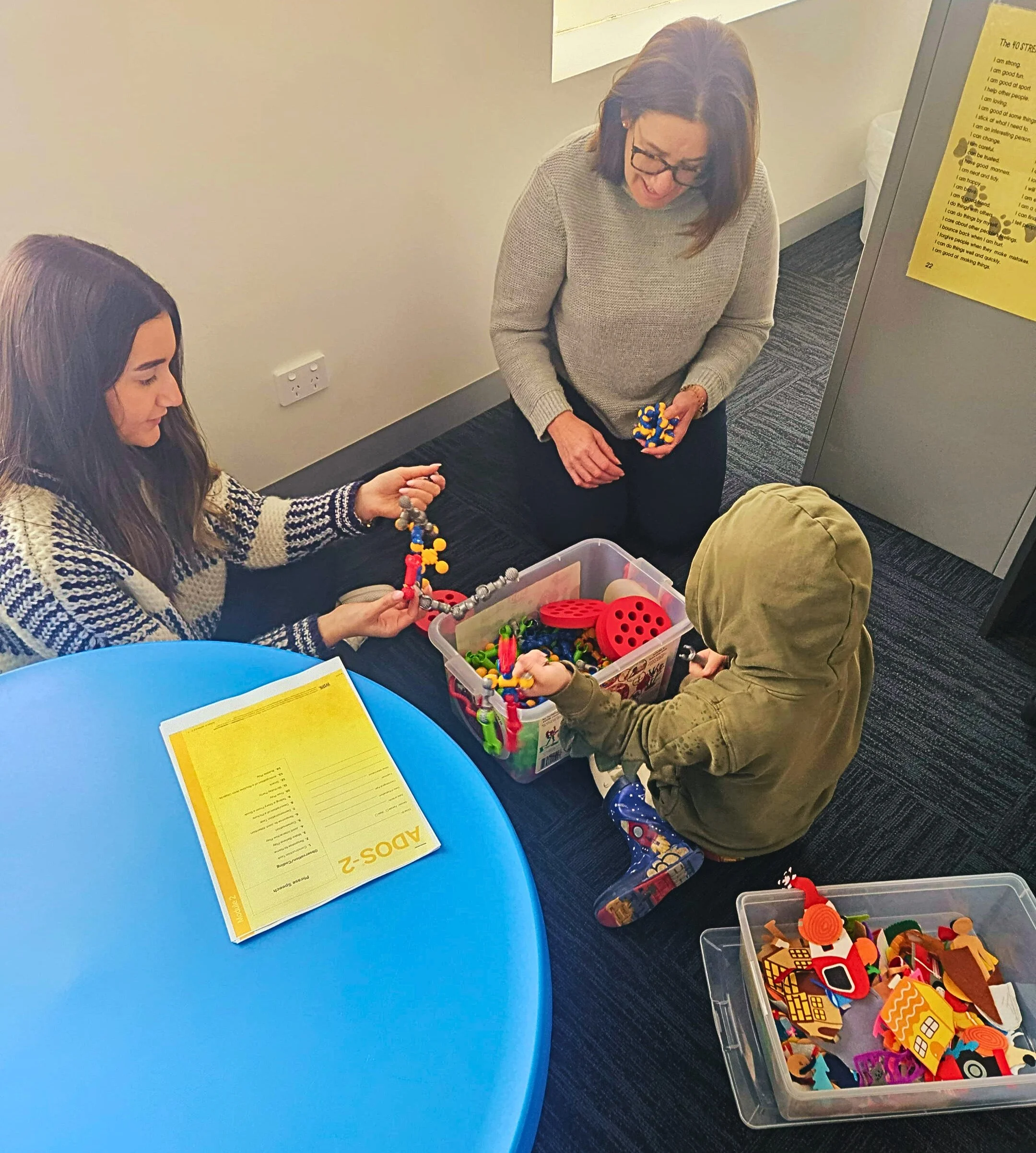
Psychological assessments at Bright FACES are designed to understand a child’s individual strengths, challenges, and learning profile.
Assessments are conducted by experienced psychologists who use evidence-based tools to provide a comprehensive picture of a child’s cognitive, emotional, social, and academic functioning.
Assessment outcomes help guide intervention planning, support school-based learning, and provide valuable insights for parents, caregivers, and teachers. Reports include clear recommendations and practical strategies to support the child’s ongoing development both at home and in the classroom.
Autism Spectrum Disorder (ASD)
Autism assessments help identify characteristics of Autism Spectrum Disorder and provide guidance for support and intervention.
Psychologists assess using:
Autism Diagnostic Observation Schedule (ADOS)
Autism Diagnostic Interview – Revised (ADI-R)
Developmental history and behavioural observations
Cognitive Assessments
Cognitive assessments measure a child’s thinking and reasoning abilities, including verbal and non-verbal skills, memory, and problem-solving.
Psychologists assess using:
Wechsler Preschool and Primary Scale of Intelligence (WPPSI)
Wechsler Intelligence Scale for Children (WISC)
Wechsler Adult Intelligence Scale (WAIS) (for older adolescents)
Educational and Learning Assessments
Educational assessments identify learning strengths and challenges that may impact academic progress.
Psychologists assess using:
Wechsler Individual Achievement Test (WIAT)
Vineland Adaptive Behaviour Scales (VABS)
Specific Learning Disorder (SLD) assessments - including Dyslexia, Dysgraphia, and Dyscalculia
Attention and Behaviour Assessments
Attention and behaviour assessments help understand concentration, impulsivity, and self-regulation difficulties that may affect a child’s functioning at school and home.
These assessments can assist in identifying ADHD and related concerns, providing insight into how best to support the child’s learning and emotional needs.
OCCUPATIONAL THERAPY ASSESSMENTS:
Occupational Therapy assessments at Bright FACES help identify a child’s strengths and areas of difficulty in everyday activities.
Assessments are conducted by experienced Occupational Therapists and focus on understanding how a child manages tasks such as play, self-care, and learning.
Findings from the assessment guide therapy planning and goal setting, and provide families and teachers with strategies to support the child’s independence and confidence in their daily environments.
Motor Skills Assessment
Motor skill assessments explore how a child uses their body to move, play, and complete fine motor tasks.
Occupational Therapists assess:
Fine motor skills - handwriting, drawing, cutting, and hand-eye coordination
Gross motor skills - balance, posture, coordination, and strength
Motor planning and sequencing - the ability to organise and carry out movements
Sensory Processing Assessment
Sensory assessments help determine how a child processes and responds to sensory input such as touch, sound, movement, and sight.
Occupational Therapists assess:
Sensory sensitivities and seeking behaviours
Body awareness and motor coordination
Regulation and attention in daily activities
Functional and Daily Living Skills Assessment
These assessments look at how a child participates in everyday routines and activities.
Occupational Therapists assess:
Dressing, feeding, and toileting skills
Play and social participation
School readiness and independence
SPEECH PATHOLOGY ASSESSMENTS:
Speech Pathology assessments at Bright FACES identify a child’s communication strengths and challenges across speech, language, and social interaction.
Assessments are completed by qualified Speech Pathologists who use standardised tools and play-based observation to gain a clear picture of how a child understands and uses language.
Assessment results guide individualised therapy goals and provide families and educators with practical strategies to support communication development at home and in learning environments.
Speech Sound and Articulation Assessment
Speech assessments examine how clearly a child can produce speech sounds.
Speech Pathologists assess:
Childhood Apraxia of Speech
Speech clarity and intelligibility (e.g. articulation and phonology)
Language and Communication Assessment
Language assessments explore how a child understands and uses spoken language.
Speech Pathologists assess:
Receptive language (understanding language that is either written or verbal)
Expressive language (using language that is either written or verbal)
Vocabulary, grammar, and narrative skills
Social Communication and Fluency Assessment
These assessments focus on how a child uses communication in social settings.
Speech Pathologists assess:
Social interaction and conversation skills
Understanding of social cues and emotions
If you would like to know more about our assessments, please contact our reception staff on 9971 5415 or info@brightfaces.com.au.